
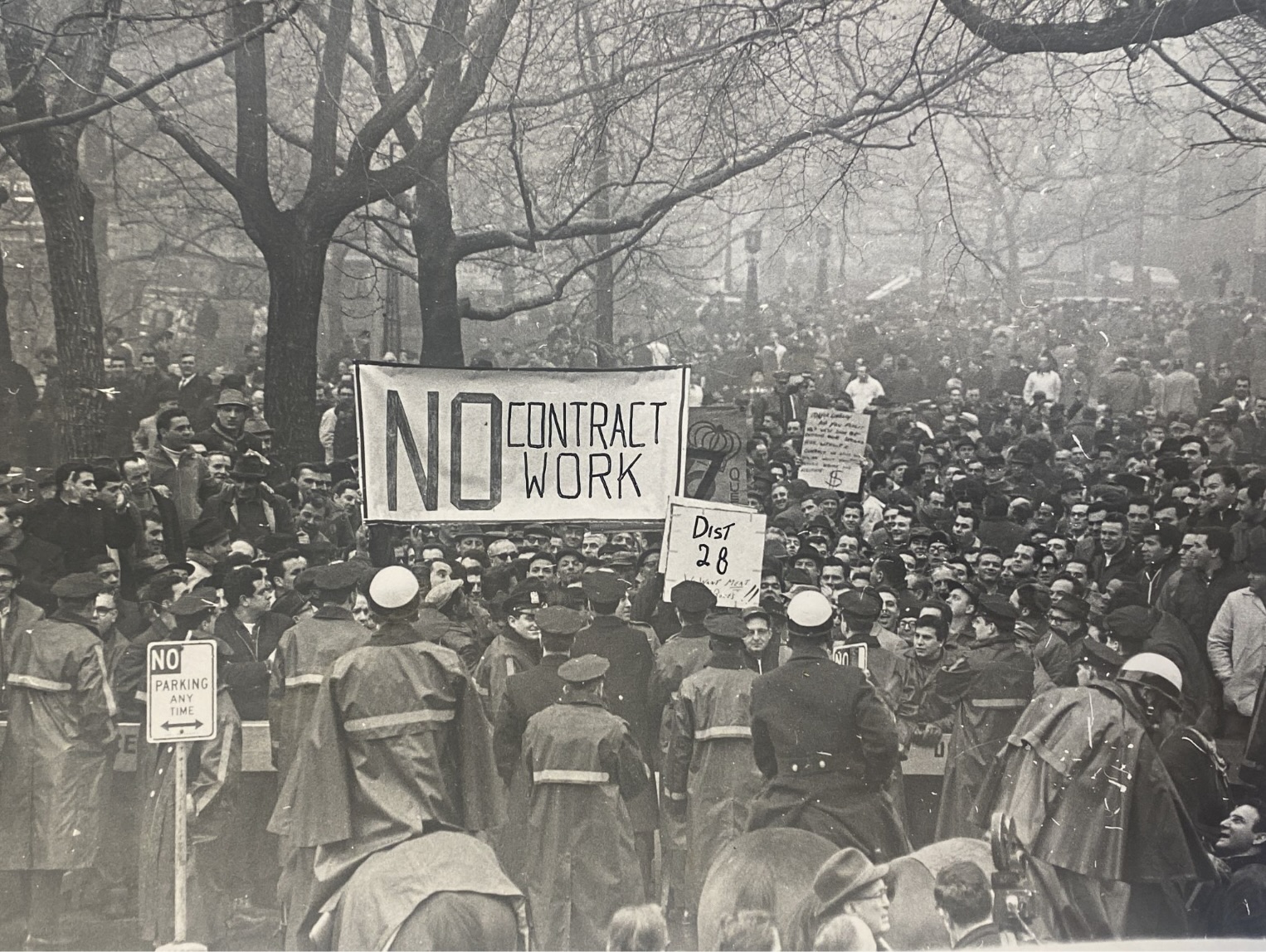
Using entirely archival media, “Dirty Days in Fun City” unearths two sanitation worker strikes and their little-known connection to the assassination of Dr.Martin Luther King Jr. Through its exploration of labor and waste, the film examines what and who society deems valuable or disposable.
DIRTY DAYS IN FUN CITY
$30,000.00
Goal-
$0.00
Raised -
498
Days to go
, United States (US)
SYNOPSIS
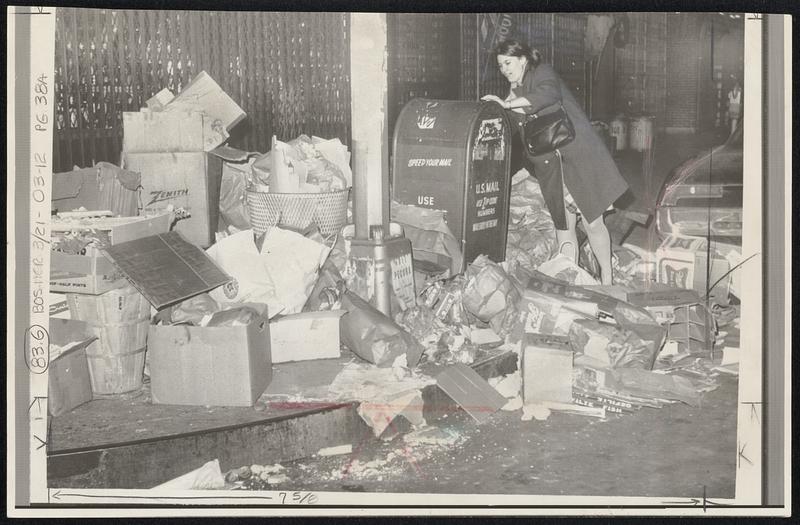
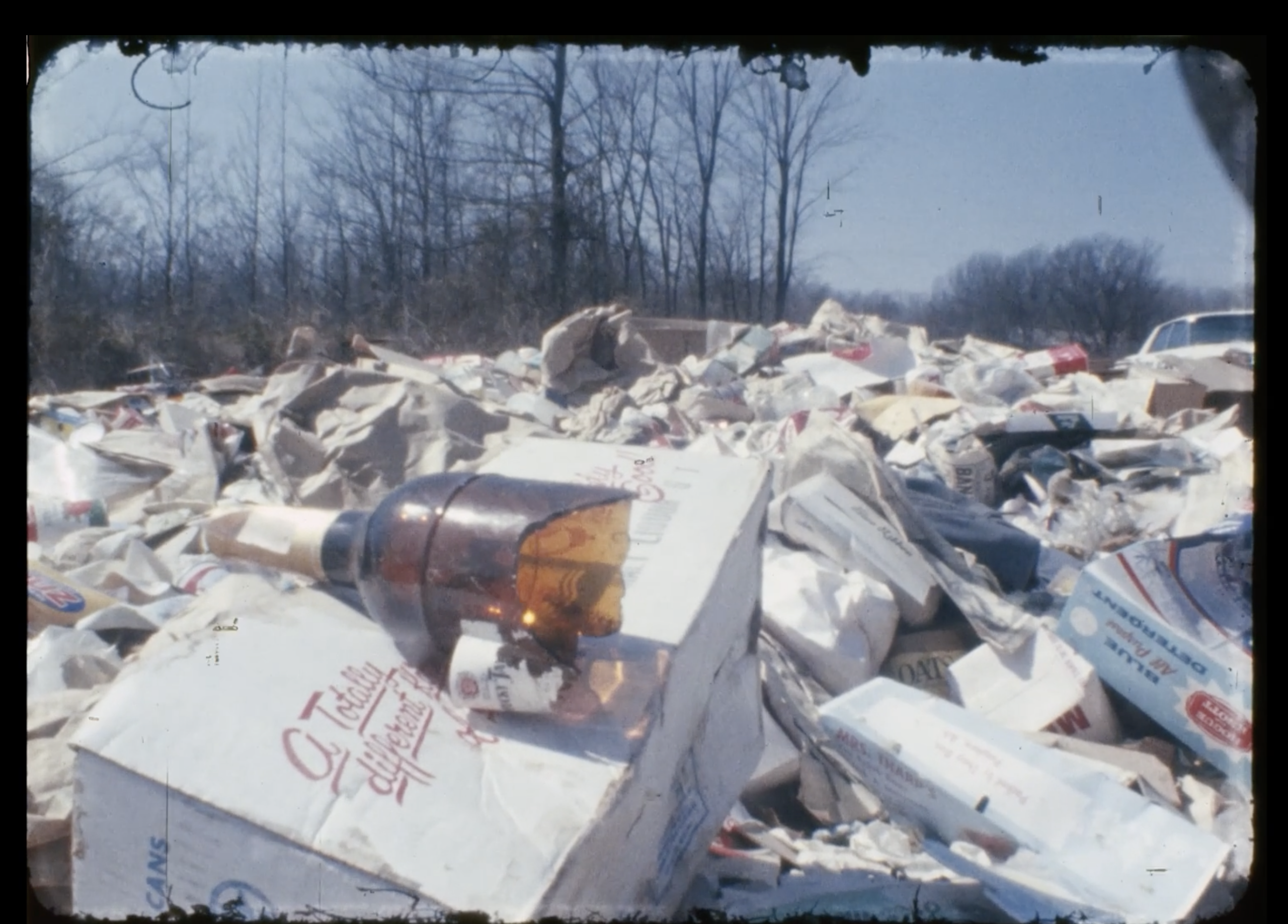
In February 1968, when the New York Mayor’s office refused to include pay increases in the city’s sanitation workers’ contract–ones that would put them on par with the police and fire departments–10,000 sanitation men took to the streets, holding picket signs reading “we want meat not bones.” Our film begins by chronicling the workers’ nine-day standoff, placing the sanitation union president, John DeLury, at the center. After being jailed for authorizing the strike in violation of a local law, DeLury bargains with the Mayor from behind bars. Through archival TV interviews with striking workers, we learn that they feel neglected and demeaned. Their needs are ignored despite shouldering the most hazardous job in city government, with more on-the-job deaths than police. As uncollected trash piles up at a rate of 10,000 tons per day and a health emergency is declared, Mayor Lindsay remains firm, even asking the Governor to call the National Guard amid rising public backlash against the strike. The impasse breaks when Governor Rockefeller intervenes, appointing a mediator whose panel secures pay and pension increases for the workers.
As the New York strike comes to a close, one in Memphis begins. The film follows a thousand New York trade workers south, where they march in solidarity with the Memphis strikers. The Black workers, who suffer both economic and racial oppression, hold picket signs reading “I Am A Man.” This is the Jim Crow South. Many of the Memphis workers qualify for food stamps despite working full-time. Unlike in New York, the National Guard is called in against the strikers. Memphis’ Mayor Loeb declares on television, “This is not New York, and nothing will be gained by ignoring our laws.” Martin Luther King Jr. and the Poor People’s Campaign join the pickets, and King is assassinated on the balcony of the Lorraine Motel. Two weeks later, the City of Memphis votes to recognize the sanitation workers’ union, promising higher wages. The workers demonstrate that by withholding their labor, even people in the lowest-paying, most arduous jobs have the power to improve their circumstances.
The film uses archival materials unearthed from local news archives and municipal records. It celebrates the power of collective action and class solidarity, showing how ordinary people can create change. The story carries renewed importance today as unionizing efforts intensify across the country, with recent strikes by employees at Amazon, Starbucks, and other unionized workplaces gaining national attention. As labor movements grow more visible across the U.S., the film speaks directly to contemporary struggles for workers’ rights and dignity.
BIOS
Katie Heiserman, Co-Director/Archival Producer
Katie Heiserman is a filmmaker and public historian passionate about preserving and publicizing overlooked histories. In her media-making practice, she uses archival material to examine collective memory and urban histories of resistance. Her work has been supported by Tribeca Festival, Chicken & Egg, the New York State Council on the Arts, the Albert Lepage Center for History in the Public Interest, the Brooklyn Arts Council, BRIC, and more. Her award-winning film “Survival Without Rent” (DOC NYC, Big Sky, Jihlava, CUFF, Athens, Rooftop) has screened at film festivals, universities, and community spaces across the US and internationally. Katie earned her MA in Archives & Public History from NYU in 2023, where she was awarded an Urban Public Humanities Fellowship.
Elana Meyers, Co-Director/Editor
Elana Meyers is a documentary filmmaker/editor from New York City. She co-directed and edited the short documentary, Survival Without Rent, which was supported by Chicken & Egg Films, American Documentary, New York State Council on the Arts, and Untitled Filmmakers Org. The film screened at DOC NYC, Big Sky Documentary Film Festival, Ji.hlava IDFF, and won Best Short Documentary at the Chicago Underground Film Festival. She was an editor on the PBS/Amazon Prime series, Citizen Nation, which was nominated for a News & Documentary Emmy for Best Editing, and edited the feature, No One Asked You, which premiered at DOC NYC. Her other work has showcased at the Camden International Film Festival, the Brooklyn Museum, and the Feminist Institute. She is currently a BRIClab TV + Film Resident. Elana is drawn to political stories that are overlooked by mainstream media. Her work spotlights personal narratives to convey how societal structures intersect with human experience.
Martha Gregory, Producer
Martha is a Brooklyn-based independent film producer and educator. Producing credits include Adam Meeks’ UNION COUNTY starring Will Poulter and Noah Centineo which premiered in the U.S. Dramatic Competition at the 2026 Sundance FIlm Festival, and Shaun Leonardo’s We Went Undefeated, a multichannel installation/film which opened at the Andrew Rafacz Gallery in 2024 and Cristin Tierney Gallery in 2025. Martha was an Executive Producer on Chloe Abraham’s THE TASTE OF MANGO (Oscilloscope, POV) which premiered at TRUE/FALSE 2023, Billy Luther’s FRYBREAD FACE & ME (ARRAY) which premiered at SXSW 2023 as well as Sierra Pettengil’s ARGONAUTS AT THE END OF HISTORY to premiere in 2026. Martha’s short doc, THREE RED SWEATERS, is a Vimeo Staff Pick and played at festivals around the world. She is the co-founder of UFO, a filmmaker support organization with programs at BAM and in the Catskills. She holds an MFA in film from Vermont College of Fine Arts and she has taught film at Kenyon College, Fashion Institute of Technology and School of Visual Art.
Zazie Ray-Trapido, Producer
Zazie Ray-Trapido is a filmmaker and producer based in Los Angeles. Her films expand on traditional formats of documentary and narrative, engaging with analog film techniques, archives, and performance. Her practice investigates relationships between memory, ideology, and the environment. Her work has been screened at festivals and venues worldwide, including the New York Film Festival, International Film Festival Rotterdam, Viennale, Curtas Vila do Conde, International Short Film Festival Oberhausen, Glasgow Short Film Festival, ICDOCS, Kurzfilm Festival Hamburg, RIDM, and Kasseler Dokfest, among others. She holds a BFA from Bard College and an MFA in Film/Video from the California Institute of the Arts. As a producer, she focuses on creative forms of narrative and nonfiction projects exhibited at Tribeca and IFFR, supported by Ikusmira Berriak, Sundance Institute, Instituto do Cinema e do Audiovisual (ICA), Yale University, Berlinale Talents, IndieLisboa, Big Sky Pitch, and the Claims Conference.
Kathryn Everett, Executive Producer
Kathryn Everett is an award-winning director, producer, writer, and advocate. Her work is deeply rooted in her belief that storytelling is the most powerful tool for promoting empathy that we have. Her credits include Daughters (2024), Lakota Nation vs. The United States (2022) and many more. She lives in New York.
Rewards
$250.00
2 Train Shirts for $250 or more donation - In exchange for this contribution, you received goods or services with the estimated fair market value of $30.00

0 backers